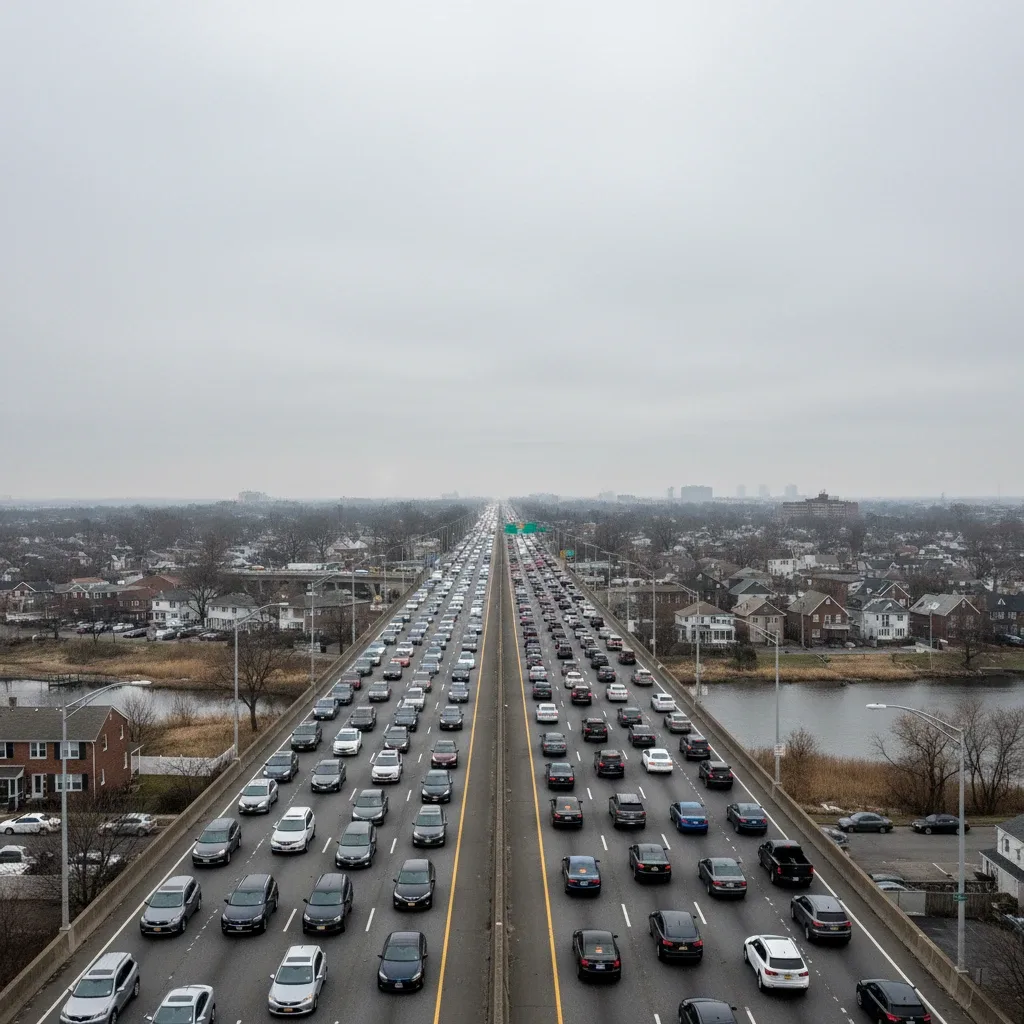
Belt Parkway Congestion Study to Expand in 2026, Mayor's Office Says By Newstrix | March 14, 2026 | Transportation & Traffic NEW YORK — Mayor Eric Adams' office announced Thursday that the city will expand its Belt Parkway congestion study in 2026, targeting persistent traffic bottlenecks and seeking comprehensive solutions. The expansion aims to gather more detailed data on traffic patterns and commuter behavior, particularly during peak hours. Belt Parkway Congestion Remains a Top Priority The Belt Parkway, a critical artery connecting Queens and Brooklyn, has long been a source of frustration for thousands of daily commuters. The planned expansion of the study underscores the city's commitment to addressing the chronic traffic issues that plague the roadway, particularly the section near Howard Beach. Department of Transportation (DOT) Commissioner Ydanis Rodriguez said the initial phase of the study, which began in late 2025, identified several key problem areas. Rodriguez emphasized the need for a more granular analysis to inform effective longterm solutions for the Belt Parkway. Expanded Data Collection for Traffic Patterns The 2026 study expansion will deploy additional traffic sensors, surveillance cameras, and realtime data analytics tools along various segments of the Belt Parkway. This includes specific focus on interchange points and notorious choke points, according to a DOT press release. Engineers will also analyze historical traffic data going back five years to identify recurring patterns and seasonal variations. The goal is to develop a predictive model that can anticipate congestion and suggest preventative measures, a major step forward for the Belt Parkway. Howard Beach Commuters Voice Frustration and Hope Residents of Howard Beach, many of whom rely on the Belt Parkway for their daily commutes, expressed a mix of frustration and cautious optimism regarding the expanded study. "Traffic here is a nightmare, especially in the mornings," said local commuter Lisa Chen, who drives the parkway daily. Community Board 10 Chairman Matt Distefano acknowledged the ongoing challenges but welcomed the city's commitment. "We've been advocating for real solutions for years, and this expanded study is a positive step," Distefano told reporters Thursday. Potential Solutions and Technological Integration Preliminary discussions from the initial study phase have included exploring smart traffic light systems and dynamic lane management. The expanded study will evaluate the feasibility of integrating these technologies to optimize traffic flow on the Belt Parkway. Other ideas under consideration include improved signage, public transit enhancements along parallel routes, and staggered work hours for city employees to reduce peak demand. These solutions aim to provide comprehensive relief beyond simple road widening, which is often not feasible in densely populated areas. Timeline and Community Engagement for Belt Parkway The expanded data collection phase is expected to last approximately six to nine months, with initial findings anticipated by late 2026. The DOT plans to hold several community workshops in Howard Beach and other affected neighborhoods to gather public input and share progress. These public engagement sessions will be crucial for ensuring that the proposed solutions meet the needs of the communities most impacted by Belt Parkway congestion. Residents are encouraged to participate and provide their perspectives on daily traffic challenges, for more information on how to participate, see Belt Parkway traffic accident today. Frequently Asked Questions Howard Beach residents often ask what impact construction on the Belt Parkway has on traffic. While necessary for longterm improvements, construction projects often create temporary bottlenecks and delays. The DOT typically tries to schedule major work during offpeak hours or weekends to minimize disruption. Commuters should check realtime traffic apps for updates and plan alternative routes when construction is underway. Another common question is about how public transportation could alleviate Belt Parkway traffic. Enhancing express bus services or extending subway lines parallel to the parkway could provide viable alternatives for commuters, reducing the number of singleoccupancy vehicles. The city is considering these options as part of a broader strategy to encourage public transit use and ease congestion. More on this topic can be explored through .