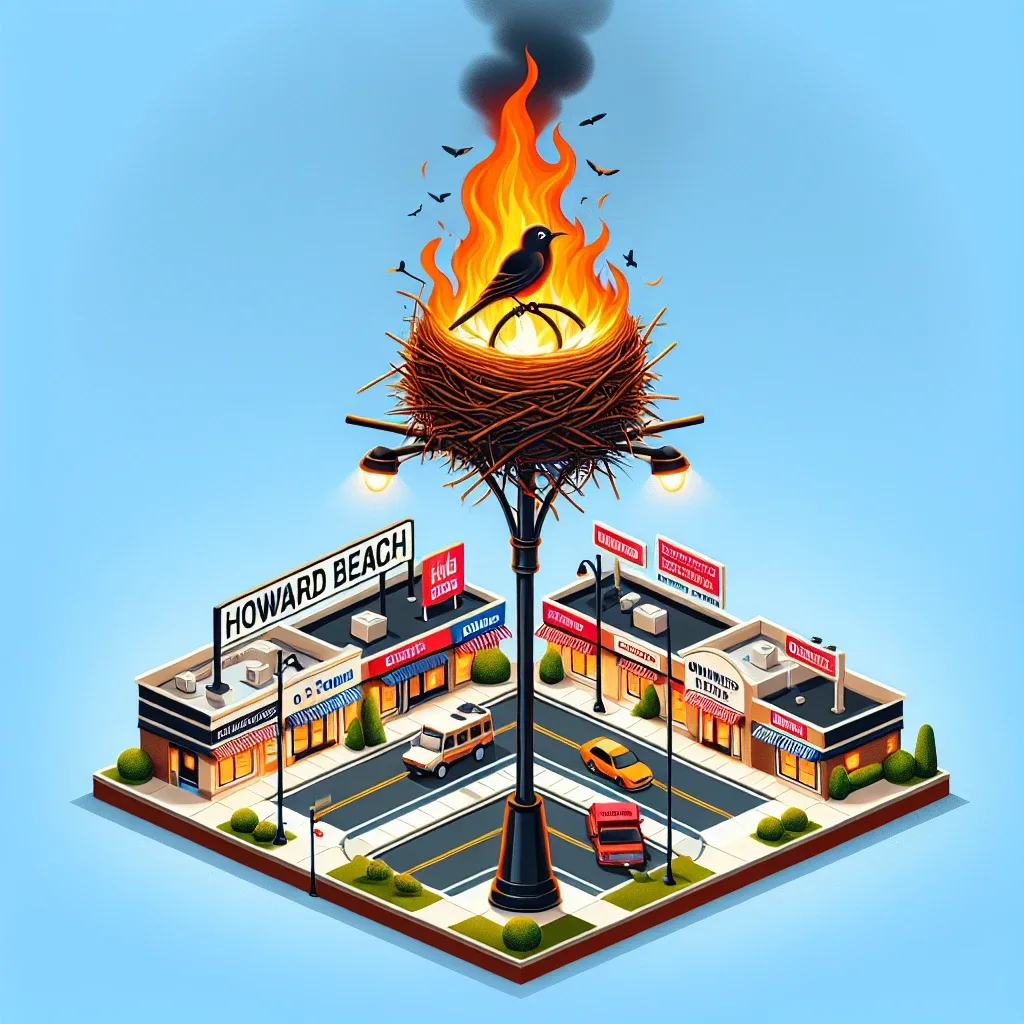
Bird's Nest Catches Fire Aboard Queens Light Pole A peculiar incident occurred in Howard Beach recently when a bird's nest caught fire at approximately 6 p.m. on 157th Avenue. The nest ignited after coming into contact with a Con Edison transformer, raising concerns among local residents about safety and wildlife protection in the area. Incident Details The event unfolded quickly, with flames visible atop the light pole, alarming passersby. Fortunately, no homes or streets suffered damage as a result of the fire. Local firefighters responded to the scene and were able to extinguish the flames within moments. Although the fire was contained, it served as a stark reminder of the potentially hazardous interactions between wildlife and urban infrastructure. Witnesses reported hearing crackling noises as the flames erupted, followed by a plume of smoke rising into the evening sky. Residents in the neighborhood expressed their surprise, noting that incidents like this are rare but not unheard of in urban settings where natural habitats intersect with manmade structures. Community Concerns This incident has sparked conversations among the community regarding fire safety and wildlife conservation. Many residents are questioning the adequacy of current measures taken by utility companies to protect local wildlife, especially during nesting season. The area's bird population is a cherished aspect of Howard Beach, and protecting their habitats must be balanced with maintaining public safety. Local advocates are now calling for utility companies to review their infrastructure to minimize such risks. They propose implementing birdsafe designs that would prevent animals from nesting in dangerous areas while simultaneously protecting the wildlife that thrives in Howard Beach. Key Points A bird's nest caught fire on 157th Avenue due to a Con Edison transformer interaction. Local firefighters quickly contained the fire, preventing damage to the nearby area. Community members are advocating for better safety measures to protect wildlife and infrastructure. Conclusion As cities continue to expand, the interactions between wildlife and urban infrastructure will likely become more common. Events like the bird's nest fire in Howard Beach not only pose immediate threats to public safety but also raise crucial questions about wildlife protection. A collaborative approach involving utility companies, local government, and community members is essential to implement preventive strategies that safeguard both residents and the natural environment. Such initiatives can help to ensure that Howard Beach remains a vibrant community where nature and urban life coexist harmoniously.