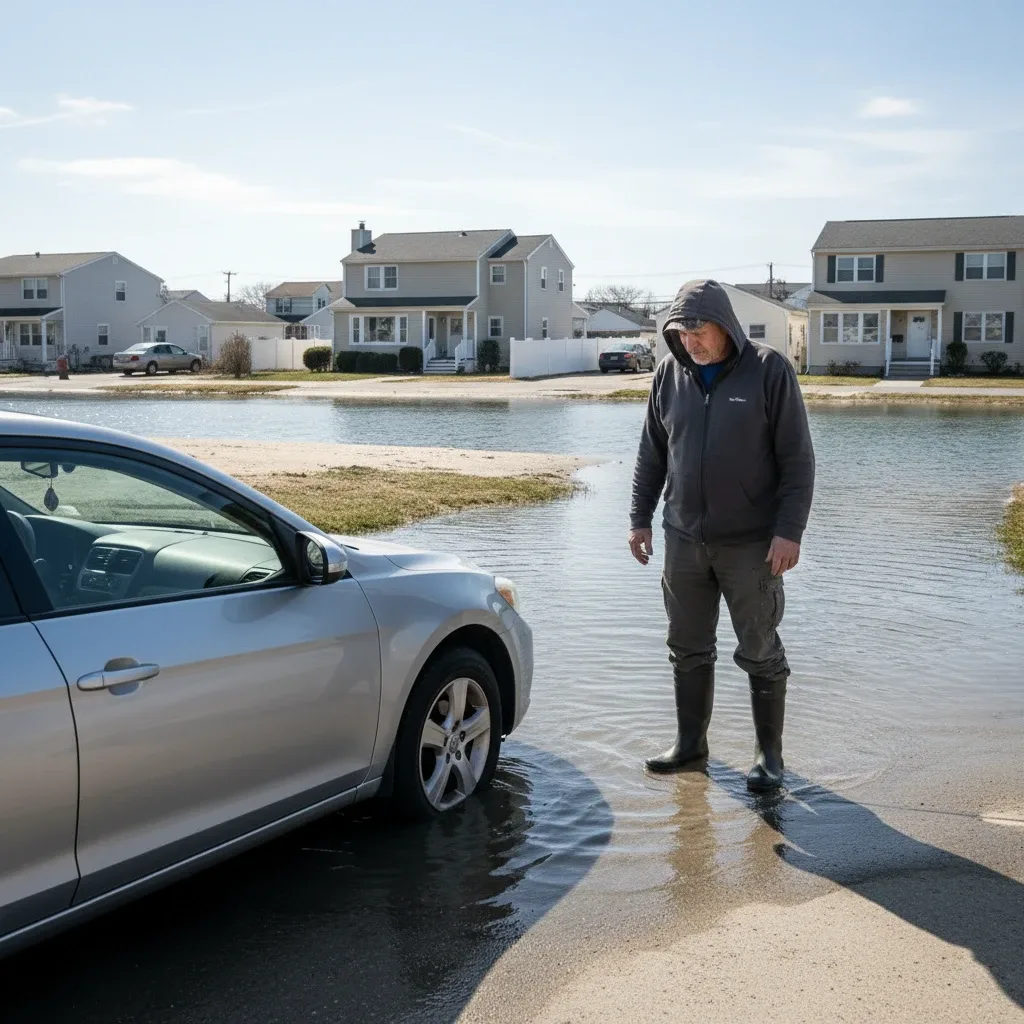
Hamilton Beach Queens Property Owners Mount Dredging Legal Campaign By Newstrix | June 16, 2026 | Community NEW YORK — Hundreds of property owners in South Queens face rising insurance premiums and recurring property damage as saltwater from coastal basins continues to submerge residential driveways twice daily. The flooding is caused by massive sand accumulation in the shallow canals that separate hamilton beach queens and Old Howard Beach, according to city drainage logs. Residents argue that the city's failure to dredge these channels has turned normal high tides into destructive floods. Legal filings published by the show that local civic leaders are now preparing a formal petition to force municipal intervention. The neighborhood's environmental challenges have amplified local political discourse, drawing parallels to broader conversations where across Queens. Homeowners assert that the city has ignored their unique maritime geography for decades. Hamilton Beach Civic Association Mounts Legal Challenge The civic group's legal team has finalized a draft complaint targeting the New York City Department of Design and Construction. The litigation demands an immediate environmental impact assessment of the clogged outfall basins along Hawtree Creek. Civic President Roger Gendron confirmed Tuesday that the organization has gathered 450 signed affidavits from affected residents. These documents chronicle specific instances of basement flooding and structural foundation cracking caused by persistent saltwater exposure. This legal action is seen as a necessary measure after several years of unfulfilled municipal promises regarding bay cleanup. Residents hope the courts will mandate a clear timeline for capital improvements. Basin Siltation Restricts Critical Outfall Drainage Operations According to the Queens Daily Eagle, municipal outfalls in the area are operating at just 30 percent of their original design capacity. Silt and sand from Jamaica Bay have drifted into the drainage basins, creating a physical barrier that prevents rain runoff from escaping. Department of Environmental Protection crews attempted to clear the main outfall near 102nd Street last month. However, engineers quickly realized that standard vacuum trucks could not reach the deep blockages situated under the marshlands. The resulting water backups have forced local business owners to install commercial sump pumps in their warehouses. Many fear that a severe tropical storm would completely submerge the commercial district. Municipal Engineers Review Sluice Gate Operations and Maintenance "We need a permanent dredging solution, not temporary vacuum trucks that only clear the top layer of sand," said local homeowner Linda Henderson. Henderson's family has lived on 104th Street for three generations and has watched the highwater line creep closer to her front door. A spokesperson for the New York City Department of Environmental Protection confirmed Friday that engineers are reviewing the feasibility of installing automated tide gates. These specialized sluice gates would automatically close during high tides and open to release storm runoff during low tides. Similar tide gate projects in nearby Brooklyn neighborhoods have successfully reduced street flooding by 50 percent. However, local leaders worry that the complex local geography will make installation difficult and costly. Community Activism Roots Deep in South Queens History The struggle against rising tides has defined life in this coastal enclave since the early twentieth century. Originally built as a summer fishing community, the neighborhood lacks the deep concrete sewer foundations found in mainland Queens. Historical archives show that the city promised to install modern drainage systems in the area as early as 1964. Sixty years later, residents are still waiting for those municipal promises to materialize into physical infrastructure. Local historical societies note that the community's unique identity has always been tied to its maritime heritage. However, that relationship is becoming increasingly difficult as rising sea levels threaten the neighborhood's longterm survival. Projected Infrastructure Timelines Extend Into Late Autumn A draft capital plan circulating among city agencies suggests that any formal dredging operations will not begin until at least November. The delay is attributed to the complex environmental permits required by the State Department of Environmental Conservation. Local leaders are urging state regulators to expedite the permitting process before the peak of the hurricane season. Community board members plan to hold a public rally next week to increase political pressure on state officials. The civic association has also reached out to federal representatives to seek Army Corps of Engineers assistance. A federal partnership could unlock additional funding for largescale bay restoration projects. Frequently Asked Questions How does saltwater fl