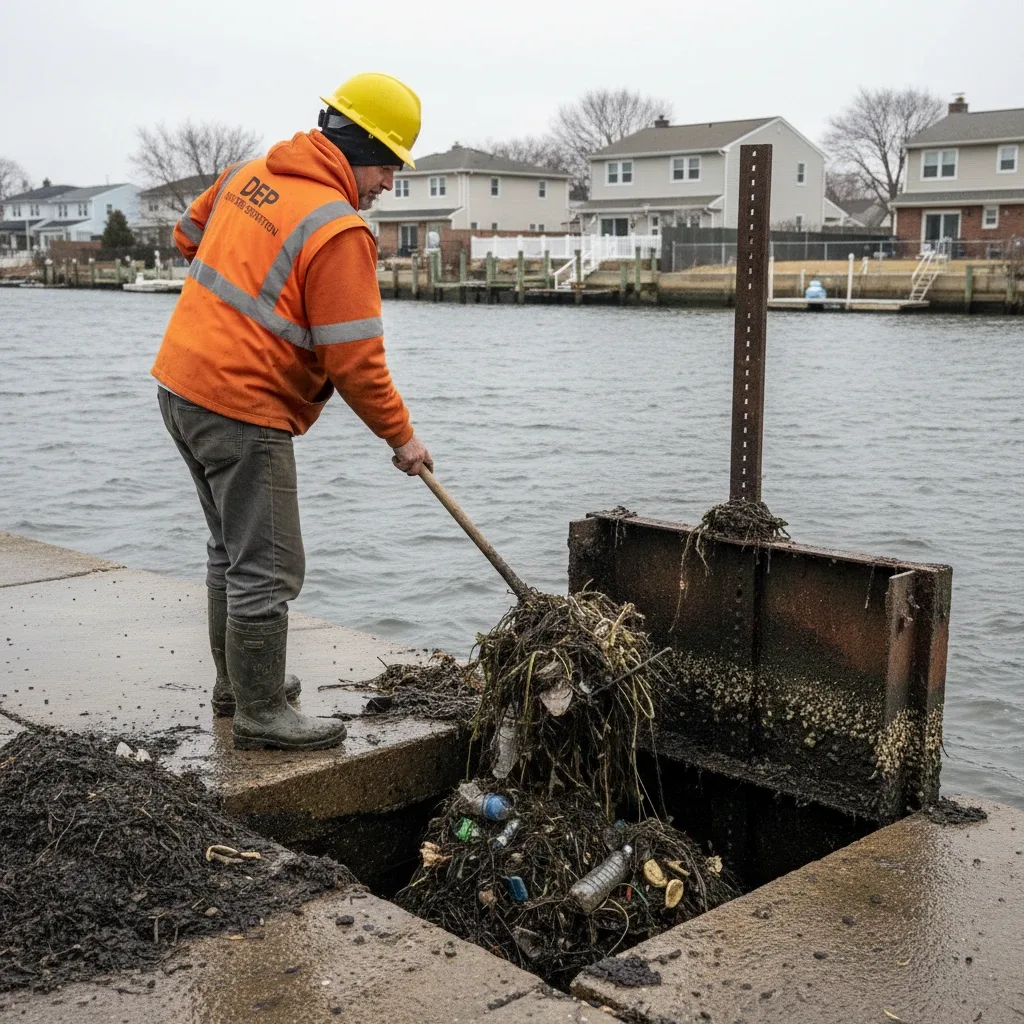
Howard Beach Tidal Gates Inspected as Flood Infrastructure Repairs Begin By Newstrix | February 11, 2026 | Development & Infrastructure NEW YORK — "Our neighborhood cannot survive another season of high tides without functioning backflow valves along the basins," Old Howard Beach resident Frank DeVito said Wednesday morning. His concerns were echoed by city engineers who arrived at the 165th Avenue canal gates to initiate structural assessments of the local drainage grids. Coastal Surge Protection Systems Face Maintenance Backlog NYC Department of Environmental Protection (DEP) crews deployed heavy machinery to clear marine debris from the main outfall channels near Hawtree Creek. According to ABC7 New York, Old Howard Beach residents regularly cope with street flooding during heavy rainstorms that coincide with astronomical high tides. Engineers discovered that three of the four primary flap gates, designed to prevent seawater from pushing back into municipal drainage pipes, were blocked by silt and coastal trash. The blockage has caused rainwater to collect in lowlying intersections instead of draining naturally into Jamaica Bay. Environmental Officials Announce Emergency Basin Upgrades "We are implementing an immediate maintenance protocol to clear these critical coastal outfalls twice a month," DEP Commissioner Rohit Aggarwala announced Wednesday afternoon. Aggarwala confirmed that the city has allocated $1.2 million for structural repairs to the tidal gates protecting the Lindenwood and Hamilton Beach communities. And the emergency funding will support the installation of new motorized sluice gates along the shellbank basin channels. These updated systems can be closed remotely by municipal water managers in advance of severe weather events to prevent coastal surges from entering the neighborhood streets. Tidal Surge Water Intrusion Limits Parking on Coastal Boulevards Street flooding along 99th Street and 165th Avenue has forced local residents to relocate their vehicles to higher ground near the Belt Parkway during high tide warnings. Business owners along Cross Bay Boulevard report that frequent street flooding has reduced foot traffic and delayed deliveries during peak commercial hours. To combat these persistent challenges, civic leaders have proposed a comprehensive marshland restoration project along the southern edge of the neighborhood. Residents discuss these infrastructure proposals and track scheduled street sweepings on the , which has become a vital hub for neighborhood organizing. This community coordination is essential, especially as municipal services are sometimes diverted to handle emergency public safety issues, such as when earlier this winter. Residents emphasize that basic infrastructure maintenance must remain a city priority. City Planning Officials Study LongTerm Sea Level Mitigation Plans The Mayor's Office of Climate and Environmental Justice has initiated a feasibility study to examine the installation of a permanent seawall along the northern edge of Jamaica Bay. The study will evaluate the potential environmental impacts on local bird sanctuaries and marine habitats. And the findings will be shared with the public during a virtual town hall meeting scheduled for next month. Local community boards are encouraging residents to participate in the planning process to ensure that local concerns are addressed in the final designs. Frequently Asked Questions Why does Howard Beach flood during sunny day high tides? Howard Beach experiences tidal flooding due to its lowlying topography and its proximity to the tidal basins of Jamaica Bay. When high tides coincide with astronomical cycles, seawater can push backward through municipal drainage pipes and rise onto local streets through catch basins, even when no rain has fallen. How will the new motorized sluice gates improve neighborhood drainage? The new motorized sluice gates can be closed remotely by city operators before a major high tide event, blocking seawater from backing up into the storm sewer system. Once the tide recedes, the gates are opened to allow accumulated rainwater to drain out into the bay naturally.