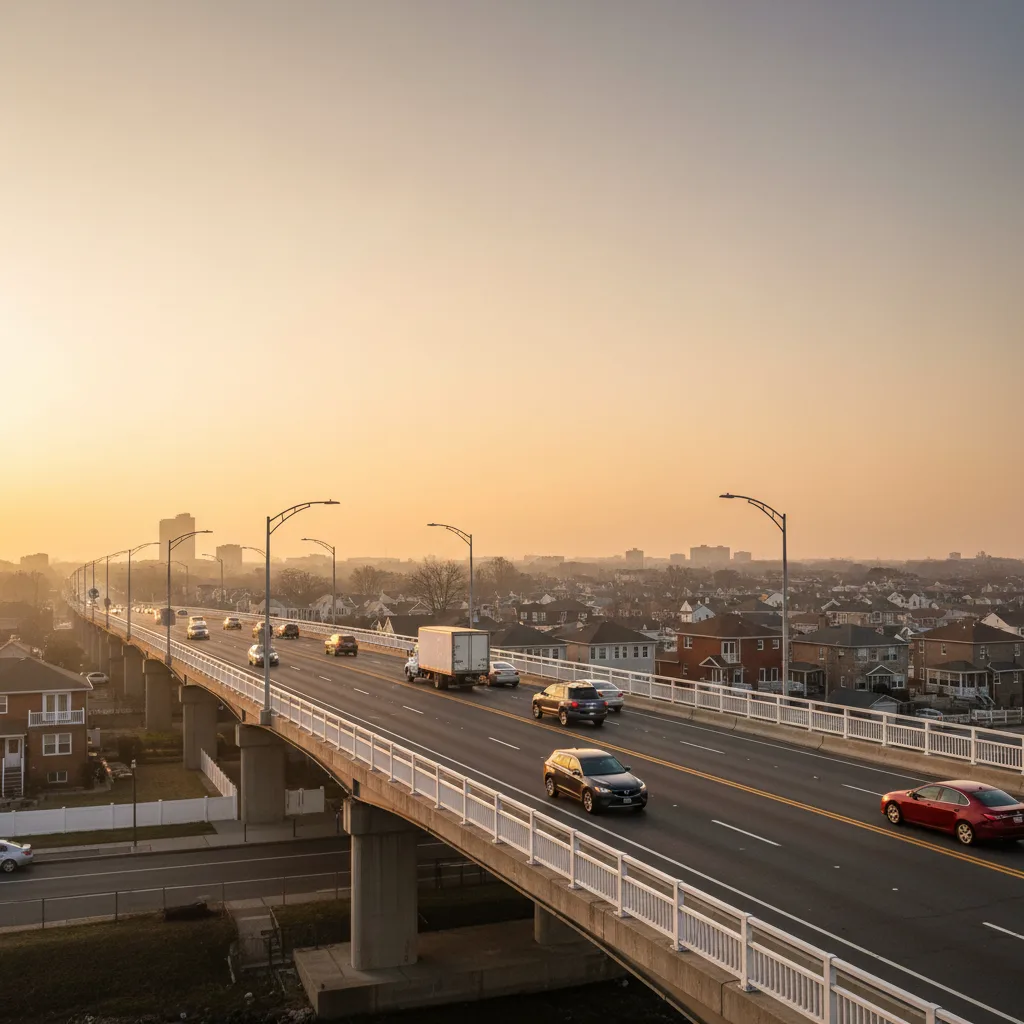
Air Quality in Howard Beach, Queens Forecasted as Fair for September 17 By Howard Beach News Staff | September 17, 2026 | Environment NEW YORK — Howard Beach, Queens, is expected to experience fair air quality on September 17, with pollution peaking around 5:00 PM, according to data from Airmine. The overall Air Quality Index (AQI) for the day is projected to be 24.3 out of 100. Detailed Pollution Levels in Howard Beach The air quality forecast for Howard Beach provides specific measurements for various pollutants. Fine particulate matter (PM2.5) is rated as good at 16.7 out of 100, while coarse particulate matter (PM10) also stands at a good 12.2 out of 100. These levels indicate relatively low concentrations of solid and liquid particles suspended in the air. However, nitrogen dioxide (NO2) levels are predicted to be fair at 24.3 out of 100, suggesting some presence of this common urban pollutant. Ozone (O3) is expected to be good at 17.4 out of 100, and sulfur dioxide (SO2) is very low at 0.8 out of 100. Carbon monoxide (CO) and formaldehyde (HCHO) levels are also expected to be low, registering 0.6 out of 100 and 0.0 out of 100 respectively. Understanding the Air Quality Index (AQI) for Howard Beach The Air Quality Index (AQI) provides a simplified way to understand air pollution levels and their associated health risks. An AQI of 24.3, falling into the 'fair' category, means the air quality is generally acceptable; however, some pollutants may pose a moderate health concern for a very small number of people who are unusually sensitive to air pollution. Residents with respiratory sensitivities in Howard Beach should pay attention to the forecast. Different pollutants contribute to the overall AQI, and their individual concentrations can vary throughout the day. The peak pollution time at 5:00 PM on September 17 suggests that vehicular traffic and industrial activities might contribute to higher NO2 levels during late afternoon hours. Staying informed about local conditions can help residents plan their outdoor activities. Health Considerations for Howard Beach Residents While the air quality in Howard Beach is generally fair, individuals with preexisting respiratory conditions, such as asthma or chronic bronchitis, should be mindful of the moderate NO2 levels. It is advisable for sensitive groups to limit prolonged outdoor exertion during the predicted peak pollution hours. Most healthy individuals are unlikely to experience adverse effects from these air quality levels. However, everyone can benefit from being aware of daily forecasts and taking precautions when pollution levels are elevated. Information on often includes air quality updates. Sources of Air Pollution in Urban Environments Urban air pollution in areas like Howard Beach typically originates from a combination of sources, including vehicle emissions, industrial activities, and energy production. Nitrogen dioxide, for instance, is primarily produced from the combustion of fossil fuels in cars, trucks, and power plants. PM2.5 and PM10 can come from construction sites, road dust, and various combustion processes. Ozone, while beneficial in the upper atmosphere, is a harmful pollutant at ground level and forms through chemical reactions involving other pollutants in the presence of sunlight. Continuous monitoring and regulation are crucial for managing these sources and improving urban air quality. Further details on environmental factors are often discussed in reports. Frequently Asked Questions What does 'fair' air quality mean for Howard Beach residents? 'Fair' air quality in Howard Beach means that the air is generally acceptable for most people, but there might be a moderate health concern for a small number of individuals who are unusually sensitive to air pollution, particularly around the peak pollution time at 5:00 PM on September 17. What are the main pollutants to monitor in Howard Beach's air quality forecast? The main pollutants monitored in Howard Beach's air quality forecast include fine particulate matter (PM2.5), coarse particulate matter (PM10), nitrogen dioxide (NO2), and ozone (O3), all of which contribute to the overall Air Quality Index.