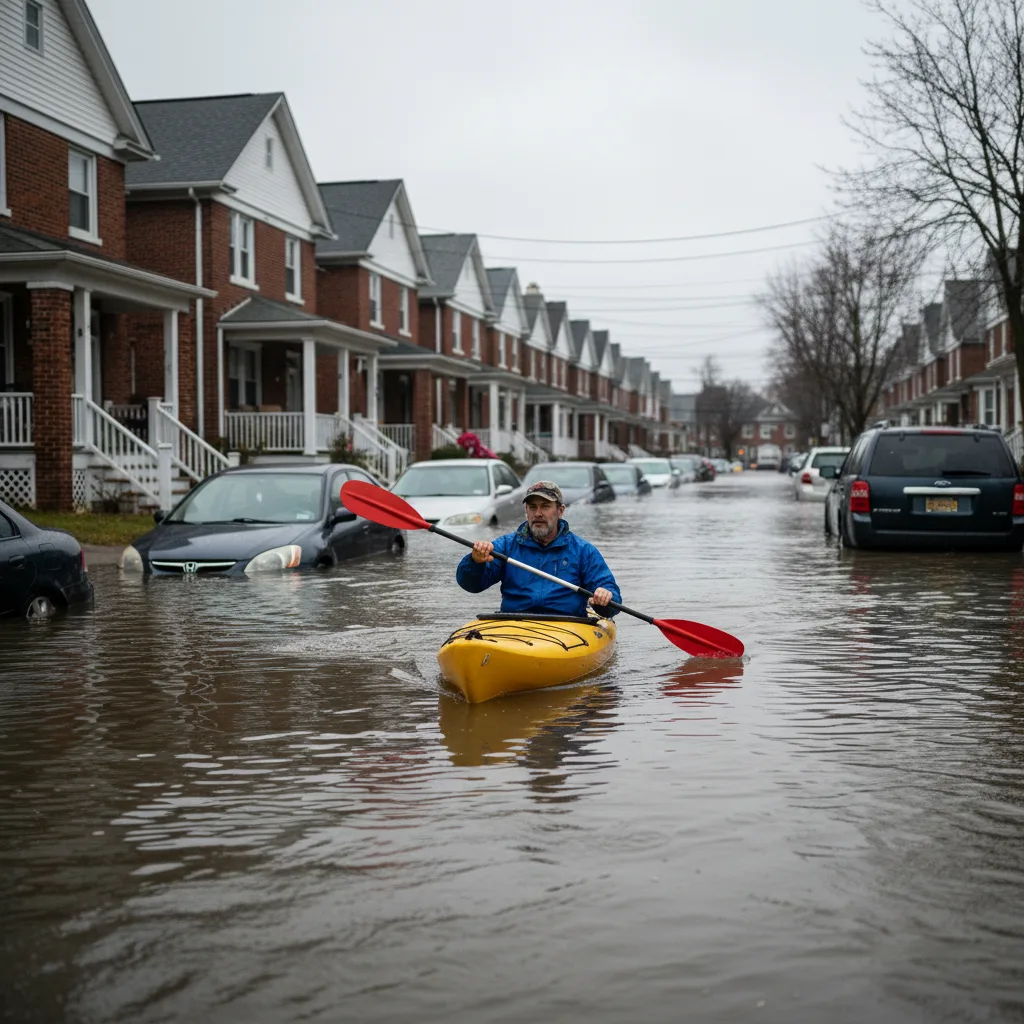
Howard Beach Residents Navigate Flooded Streets Using Kayaks By Howard Beach News Staff | October 1, 2026 | Emergency & Fire NEW YORK — Howard Beach News reported that local residents resorted to using kayaks to navigate flooded streets this week after a powerful nor’easter brought heavy rain, strong winds, and high tides to the area. The storm caused extensive flooding, underscoring the neighborhood’s ongoing vulnerability to storm surge. Nor'easter Unleashes Severe Flooding Across Howard Beach The recent nor’easter, which swept through the Queens borough, delivered substantial rainfall, persistent strong winds, and unusually high tides. This combination overwhelmed local drainage systems and led to widespread street inundation across Howard Beach, as Howard Beach News reported. Many streets became impassable for standard vehicles, forcing residents to seek alternative means of transport. The storm demonstrated the persistent challenges faced by this lowlying community. Official Warnings and Community Preparedness Efforts City officials issued several warnings leading up to the nor'easter, advising residents in coastal and lowlying areas to prepare for severe weather. Despite these advisories, the scale of the flooding surprised many, particularly in areas prone to storm surge. The Howard Beach community often finds itself at the forefront of such weather events. Local authorities have previously acknowledged the neighborhood's particular susceptibility to tidal flooding, a concern highlighted by Council Member Ariola's call for . Unprecedented Kayak Use Reflects Local Impact The visual of residents traversing their streets in kayaks quickly became a poignant symbol of the storm's impact. While some areas are accustomed to minor pooling after heavy rains, the necessity for kayaks pointed to an exceptional level of inundation. This immediate, practical response from residents allowed them to move between homes and access essential supplies. The impromptu use of watercraft provided a stark illustration of the area's challenges during severe weather events. Howard Beach: A HardestHit LowLying Area in Queens Houses in Howard Beach, particularly those closest to the water, bore the brunt of the storm's fury. The area is consistently identified among the hardesthit lowlying neighborhoods in Queens during such weather occurrences, according to additional reporting by Howard Beach News. This persistent vulnerability stems from its geographic location and elevation, which makes it particularly susceptible to coastal flooding and storm surges. The recent event reinforces the ongoing need for robust flood mitigation strategies. LongTerm Concerns and Future Preparedness The nor'easter’s impact reignites discussions about longterm infrastructure solutions and enhanced preparedness measures for Howard Beach. The community has long advocated for better flood defenses. Local government and environmental agencies continue to study ways to protect the vulnerable coastline and residential areas. Residents remain concerned about the frequency and intensity of such storms in 2026 and beyond, pushing for more permanent solutions to safeguard their homes and properties. Frequently Asked Questions What caused the severe flooding in Howard Beach during the nor'easter? A powerful combination of heavy rain, strong winds, and unusually high tides from the recent nor'easter contributed to the severe flooding. The lowlying geography of Howard Beach makes it particularly vulnerable to such conditions, as local news outlets reported, overwhelming the existing drainage infrastructure. What areas of Howard Beach were most affected by the storm? The Howard Beach News reported that several flooded parts of the neighborhood experienced significant inundation, particularly streets closest to the waterfront. These lowlying sections of the community are consistently identified as the hardesthit areas during coastal storm events. What resources are available for Howard Beach residents impacted by flooding? Residents affected by flooding in Howard Beach should monitor local government websites for emergency assistance programs and resources. The New York City Emergency Management agency often provides guidance on flood recovery, including information on cleanup, structural assessments, and potential financial aid options.