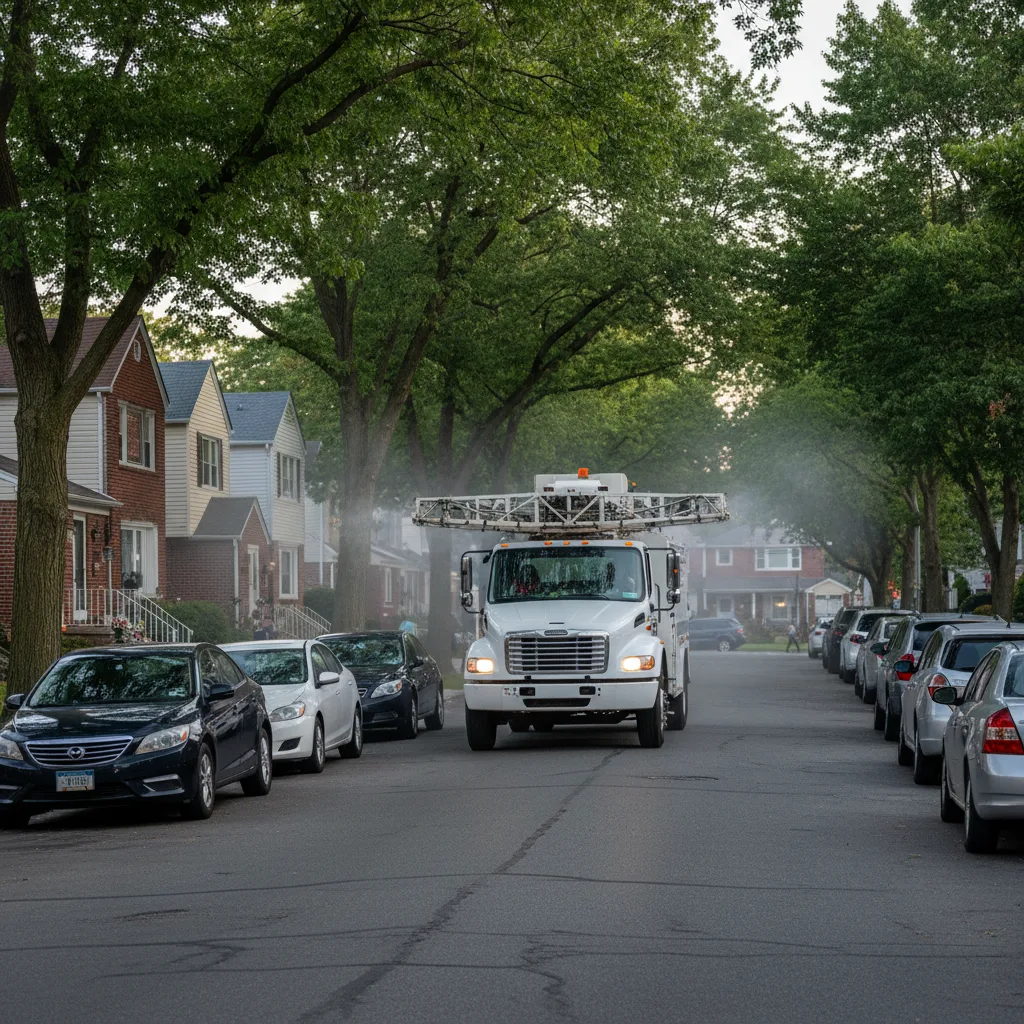
Howard Beach Undergo Pesticide Spraying to Combat Insects By Pj381TKec6Q0iVJsRf4c | August 20, 2026 | Environment NEW YORK — Howard Beach, Sunnyside, and other Queens neighborhoods are scheduled to undergo pesticide spraying on Tuesday to combat insect populations, according to QNS.com. This initiative is part of a broader public health effort to control pests and potential disease vectors. Citywide Pesticide Application Schedule The Tuesday spraying operation is a coordinated effort by the city's health and environmental departments. The exact timing and routes will be announced to minimize public inconvenience while maximizing effectiveness. These spraying programs are routinely conducted throughout the warmer months across various New York City boroughs. They target a range of insects that can pose health risks or become a nuisance to residents. Targeted Insect Control in Queens Neighborhoods Specific attention is being paid to areas like Howard Beach and Sunnyside due to previous surveillance data indicating elevated insect activity. The pesticides used are typically approved for urban application and are designed to be effective against pests while posing minimal risk to humans and pets. The goal is to reduce populations of mosquitoes, which can carry West Nile virus, and other bothersome insects. Public health officials continuously monitor insect populations to determine the need and scope of these spraying initiatives. Resident Precautions During Spraying Operations Residents in the affected Howard Beach areas are usually advised to take certain precautions during spraying. These often include keeping windows closed, bringing pets and outdoor furniture indoors, and avoiding direct contact with the spray. Notifications are typically issued through various channels, including local news outlets and community alerts, to ensure residents are aware of upcoming spraying dates. The city's website often provides detailed information and a schedule of operations. Broader Public Health Initiatives in Howard Beach The pesticide spraying is one component of a larger public health strategy implemented in Howard Beach and surrounding Queens areas. This comprehensive approach also includes public education on preventing insect breeding, particularly by eliminating standing water. Other initiatives include funding for sanitation services, as seen in the recent allocation of in Howard Beach and nearby neighborhoods. These combined efforts aim to improve overall community health and wellbeing. Community Engagement and Environmental Concerns Community leaders and residents often engage in discussions regarding the environmental impact and necessity of pesticide spraying. Balancing pest control with environmental considerations is a constant challenge for city agencies. The city aims to use the least toxic yet effective methods available, relying on scientific data and public health guidelines. Residents with specific health concerns are encouraged to consult with health professionals and review city resources on pesticide use. Frequently Asked Questions What types of pesticides are used in these spraying operations in Howard Beach? The New York City Department of Health and Mental Hygiene typically uses pesticides approved by the Environmental Protection Agency (EPA) for urban pest control. These formulations are generally designed to break down quickly in the environment and have low toxicity to humans and pets when applied according to guidelines. Specific active ingredients can vary, but officials prioritize public safety. How can residents minimize exposure to pesticides during spraying? During scheduled spraying, residents should stay indoors with windows closed, especially during the hours of operation. If you have air conditioning, use it to circulate indoor air. Bring children's toys, pet bowls, and clotheslines indoors. After the spraying, it's advisable to wash any outdoor items that may have come into contact with the pesticide before use.