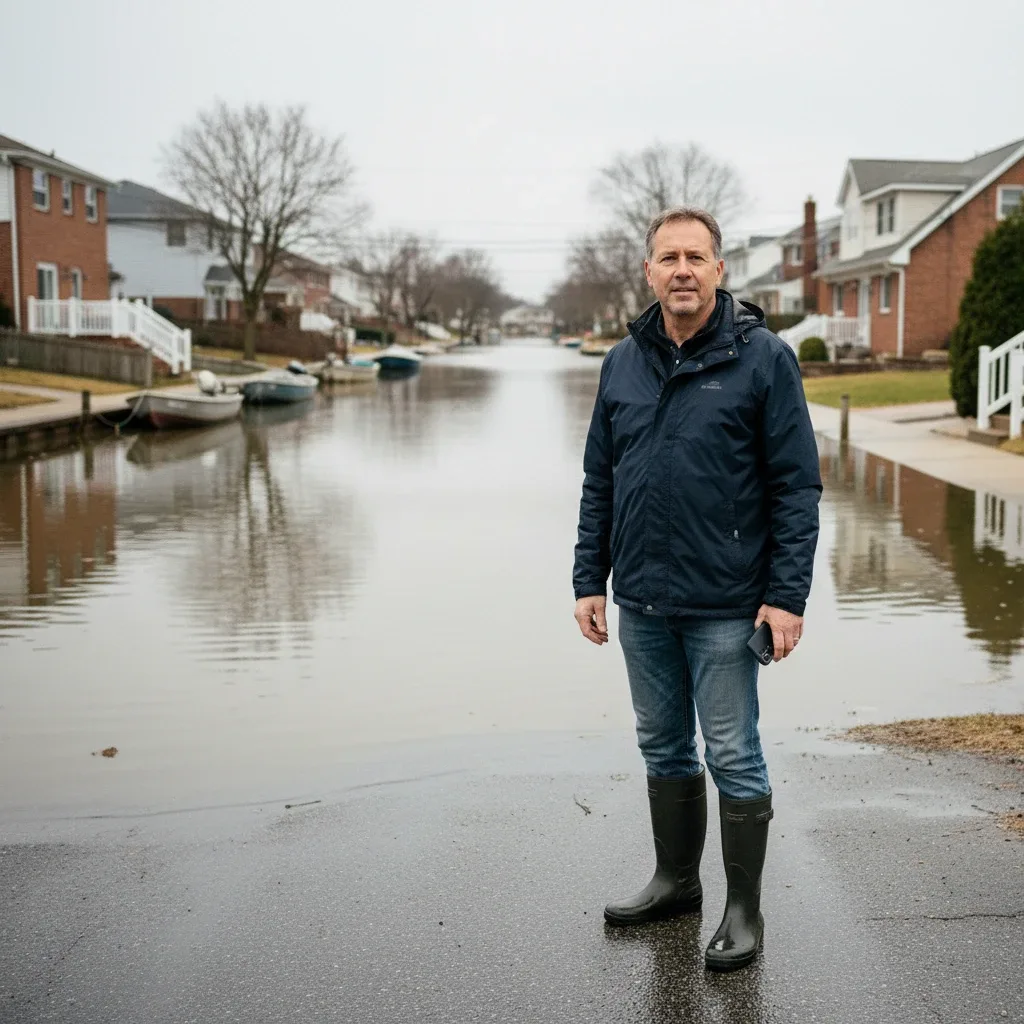
Homeowners Use RealTime Data to Monitor Basin Tides By Newstrix | March 10, 2026 | Environment NEW YORK — "We cannot afford to wait for another major storm to secure these vulnerable coastal basements," Old Howard Beach Civic Association President Maria Polito said Tuesday. Polito urged municipal engineers to accelerate structural checkvalve installations as tidal highwater marks continue to rise. The local neighborhood association is working with environmental scientists to track streetlevel water accumulation during spring tide cycles. Residents are utilizing specialized mobile applications to receive local tidal updates. Civic Association Demands Action on Storm Vulnerabilities Residents along the canal blocks are experiencing localized street flooding during regular high tide cycles even without rain. Homeowners are calling for a comprehensive review of the area's subterranean drainage infrastructure. Flurries of wind whipped up spray from the nearby canal, casting a salty mist over the rowboats tied to the wooden docks. Local leaders emphasized that delayed infrastructure updates put residential properties at risk. Environmental Engineers Track Escalating HighWater Marks Engineers from the Queens Daily Eagle reported that water levels in the basins surrounding Old Howard Beach and Hamilton Beach regularly overflow during lunar high tides. The data collected by environmental monitoring stations suggests that tide levels have risen an average of 1.2 inches over the last decade. This trend has forced homeowners to continuously monitor the conditions. Many residents have installed individual basement water sensors that connect directly to their smartphones. Department of Environmental Protection Allocates Resilience Funding The New York City Department of Environmental Protection committed 4.2 million dollars for the installation of new backflow preventers along the Shellbank Basin outflow gates. These specialized valves prevent bay water from entering the street drainage pipes during high tides. Some streets have historically suffered severe tidal inundation during seasonal high water cycles. Similar environmental impacts were observed during a recent event that temporarily submerged several residential driveways. Coastal Infrastructure Upgrades Scheduled for Spring Rollout Municipal construction crews are scheduled to begin the drainage upgrade project by the end of April 2026. The work will require temporary lane closures along 163rd Avenue during daytime working hours. Local businesses along the canal corridors expressed support for the project, noting that street flooding deters customers. The civic association plans to host an informational meeting with city engineers next week. Homeowners Adjust Schedules for RealTime Basins Monitoring Families living on the waterfront have adapted their daily schedules to coordinate with the local tide tables. Some residents have elevated their heating and electrical systems to prevent water damage in utility rooms. Community volunteers continue to document localized flooding events by submitting photographs to the city's 311 reporting system. These citizensubmitted reports help engineers identify blockages in the neighborhood drainage network. Frequently Asked Questions How do backflow prevention valves protect residential properties? Backflow prevention valves are mechanical devices installed inside drainage pipes that allow stormwater to flow out into the canal but close automatically when water pressure from the bay rises. This prevents seawater from backing up through the storm drains and flooding residential streets. These systems are essential for managing tidal overflow in lowlying coastal neighborhoods. What realtime monitoring tools are available for tracking local tides? Residents can utilize the National Oceanic and Atmospheric Administration’s online tide portal or download specialized marine weather applications that provide localized hourly tide predictions. These digital tools allow homeowners to receive automatic alerts when local tide levels are projected to exceed minor flood thresholds. Many neighborhood groups also share realtime updates on local social media channels.