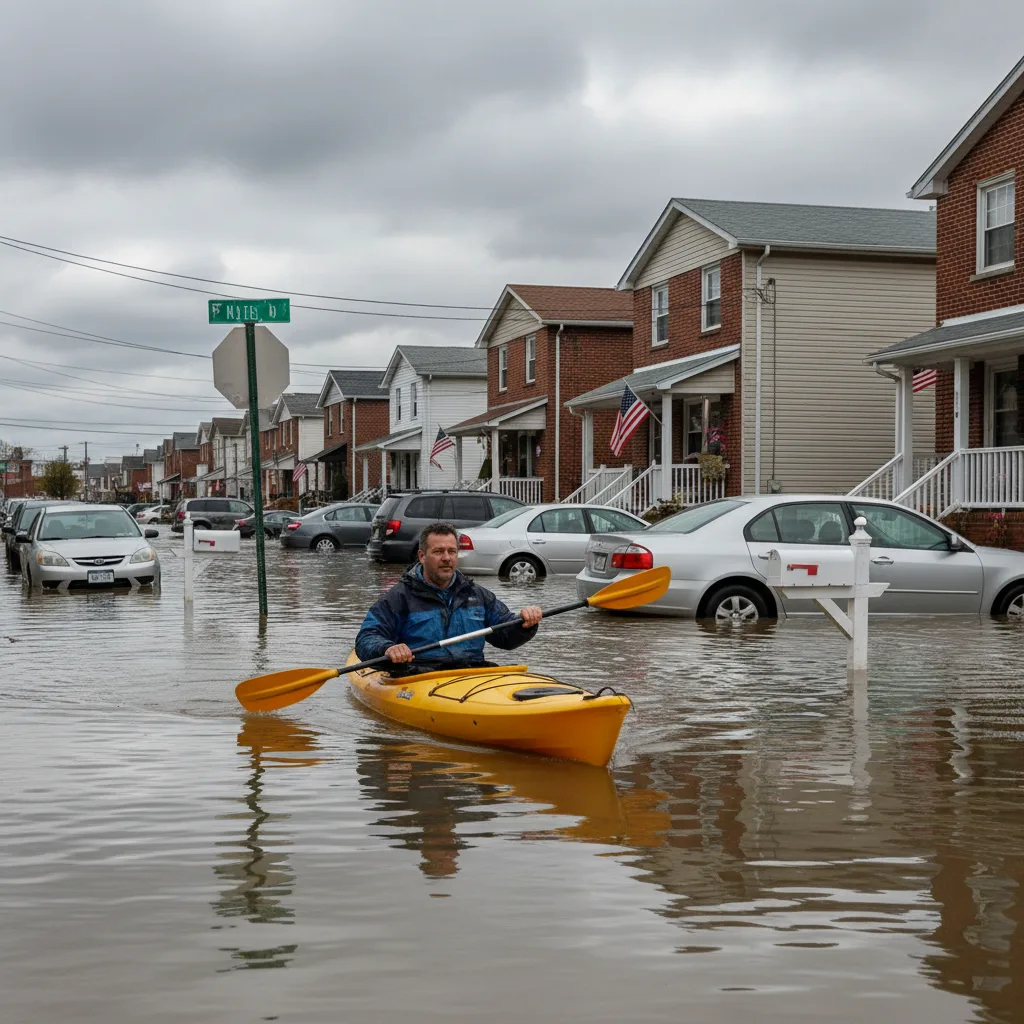
Kayaks Used in Howard Beach Flooding After Nor'easter Hits By Howard Beach News Staff | September 29, 2026 | Emergency & Fire NEW YORK — Residents of flooded New York City neighborhoods, including Howard Beach, resorted to using kayaks to navigate their streets after a powerful nor'easter brought heavy rain, strong winds, and high tides today, according to Ground News. Footage from Queens captured individuals paddling through significant floodwaters toward a train station. Howard Beach Among HardestHit LowLying Areas Howard Beach was identified as one of the hardesthit lowlying areas in Queens, experiencing extensive flooding that rendered many streets impassable for traditional vehicles. The nor'easter delivered a combination of elements — heavy rainfall, strong coastal winds, and unusually high tides — that overwhelmed local drainage systems. This forced residents to find unconventional means of transport to move around their neighborhood, as seen in the viral video footage circulated online. The severity of the flooding highlighted ongoing vulnerabilities in the area, a common discussion point for locals as previous reports on have shown. Emergency services were stretched thin responding to numerous calls for assistance across the affected boroughs. Queens Footage Shows Kayakers Towards Train Station Compelling footage from Queens showed the extraordinary scene of people navigating deep floodwaters in kayaks to reach the safety of higher ground or public transportation. One particularly striking video, reported by Ground News, depicted individuals calmly paddling their way towards a local train station, emphasizing the disruption to daily commutes. These visuals quickly spread across social media platforms, drawing national attention to the plight of New York City residents. The sheer depth of the water in some areas meant that even large SUVs struggled to pass, making kayaks a practical necessity for those venturing out. The images served as a stark reminder of the immediate impact of severe weather events on urban infrastructure and daily life. Such scenes are unfortunately becoming more frequent in coastal communities. Impact of Nor'easter: Rain, Wind, and High Tides Converge The nor'easter that struck New York City today was characterized by its destructive trifecta: relentless heavy rain, sustained strong winds, and significantly elevated high tides. This combination proved particularly devastating for coastal communities like Howard Beach, which are already susceptible to storm surges. The continuous downpour exacerbated street flooding, while high winds brought down trees and power lines in other parts of the city. The concurrent high tides prevented floodwaters from receding, prolonging the inundation of streets and properties. Meteorologists had warned of the storm's potential, advising residents in lowlying areas to prepare for severe conditions. The storm's impact led to widespread travel disruptions and localized power outages, compounding the challenges faced by affected neighborhoods. Community Resilience and Emergency Response in Howard Beach Despite the challenging conditions, the Howard Beach community demonstrated remarkable resilience, with neighbors assisting one another. Local emergency responders worked tirelessly to manage the crisis, deploying resources to rescue stranded individuals and clear debris. The quick thinking of residents using kayaks underscored a proactive approach to a difficult situation. The city's emergency management office issued several advisories throughout the day, urging residents to stay indoors and avoid flooded roadways. The response efforts were coordinated across various city agencies, including the NYPD and the Fire Department of New York (FDNY). The immediate focus remained on ensuring public safety and restoring essential services to the most affected areas. Looking Ahead: Flood Mitigation and Infrastructure Needs The widespread flooding in Howard Beach today reignites discussions about longterm flood mitigation strategies and infrastructure improvements for coastal communities in New York City. City officials are expected to reevaluate existing flood defenses and consider investments in more robust solutions to protect vulnerable areas from increasingly frequent and intense weather events. The incident serves as a critical case study for urban planning and climate resilience. Residents and local advocacy groups will likely press for greater attention and resources to address these vulnerabilities. The sight of kayaks on city streets provides a potent symbol of the urgent need for comprehensive solutions to protect communities like Howard Beach from the impacts of climate change. Further engineering studies and community consultations are anticipated in the coming months. Frequently Asked Questions Why was Howard Beach particularly affected by the nor'easter flooding? Howard Beach is a lowlying coastal community, making it highly susceptible