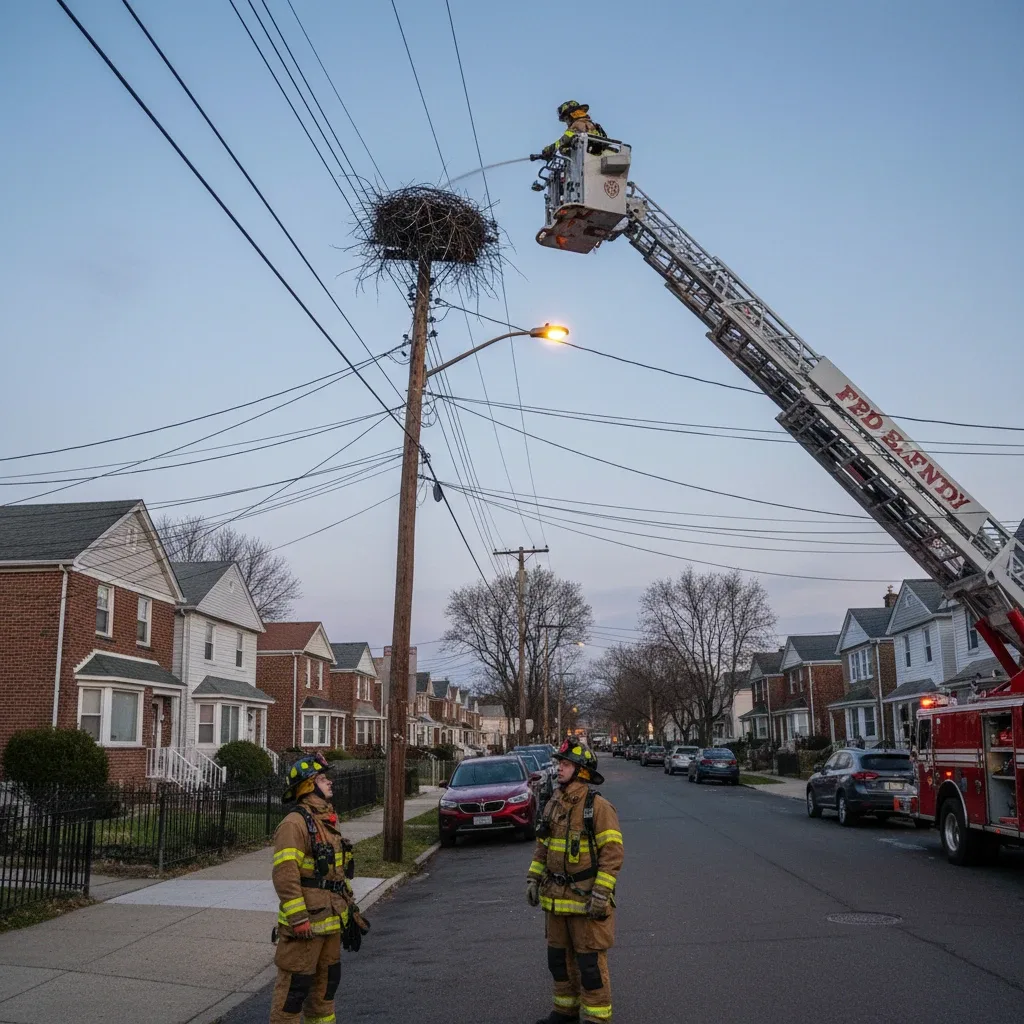
NYC Fire Department Responds to Howard Beach Light Pole Fire By Newstrix | October 26, 2026 | Emergency & Fire NEW YORK — The New York City Fire Department responded swiftly to a bird's nest fire atop a light pole in Howard Beach on Tuesday evening. The incident, which occurred just before 6 p.m. on 157th Avenue, brought local emergency services to the scene, according to ABC7 New York. Howard Beach Crews Tackle Unusual Blaze on 157th Avenue Firefighters arrived at the Howard Beach location to find the bird's nest actively burning atop a utility pole. The immediate concern was to contain the fire before it could spread to nearby structures or vegetation, a common hazard in densely populated urban areas. Crews from the New York City Fire Department (FDNY) quickly assessed the situation, initiating procedures to ensure public safety. Local authorities secured the area around 157th Avenue, a familiar street to Howard Beach residents, to prevent any onlookers from approaching the potentially dangerous scene. Electrical Risks and Public Safety in Howard Beach Fires involving utility poles carry inherent risks due to the presence of electrical wiring. Firefighters focused on isolating the power to the affected pole before fully extinguishing the blaze. These types of incidents highlight the need for careful maintenance of urban infrastructure, especially in residential areas like Howard Beach. Public safety protocols are always paramount during such emergencies, ensuring that electrical hazards are mitigated effectively. Impact on Local Utilities and Traffic While the fire itself was localized, incidents involving utility infrastructure can lead to temporary power outages for residents or disruptions to local services. Local power companies often work in conjunction with the FDNY to address such situations promptly. Traffic on 157th Avenue was temporarily impacted as emergency vehicles occupied the street. Howard Beach residents in the immediate vicinity were advised to seek alternate routes during the response efforts, according to local reports. Community Response to the Howard Beach Incident News of the light pole fire quickly spread through local community groups and online forums. Residents expressed relief that the fire was contained without major incident, underscoring the rapid response of emergency services. This event also sparked conversations among Howard Beach neighbors about the importance of reporting potential hazards. Such vigilance helps ensure that small issues are addressed before escalating into larger emergencies, protecting the community's safety. Preventing Future Incidents in Queens Neighborhoods Preventative measures can play a significant role in reducing occurrences like this bird's nest fire. Regular inspections of utility poles by local service providers can help identify and remove nesting materials that could pose a fire risk. For residents in Howard Beach and other Queens neighborhoods, reporting suspicious smoke or fire to 911 immediately is critical. Prompt action by both authorities and community members helps maintain the safety and wellbeing of the area, preventing largerscale emergencies. The FDNY continuously stresses public awareness for such events in residential zones. Frequently Asked Questions What should residents do if they spot a similar fire on a utility pole in Howard Beach? If you see a fire on a utility pole or any other electrical hazard, you should immediately call 911. Do not attempt to extinguish the fire yourself or approach the pole, as live wires can pose extreme danger. Emergency services are equipped to handle these situations safely, as demonstrated by the rapid response on 157th Avenue. How do bird nests typically catch fire on utility poles? Bird nests on utility poles can catch fire due to several reasons, including contact with live electrical wires, sparking from equipment, or even being ignited by external heat sources during dry periods. The nesting materials themselves, often dry twigs and leaves, are highly flammable, creating a significant fire risk when in close proximity to electrical components. This is a common issue utilities monitor across urban environments.