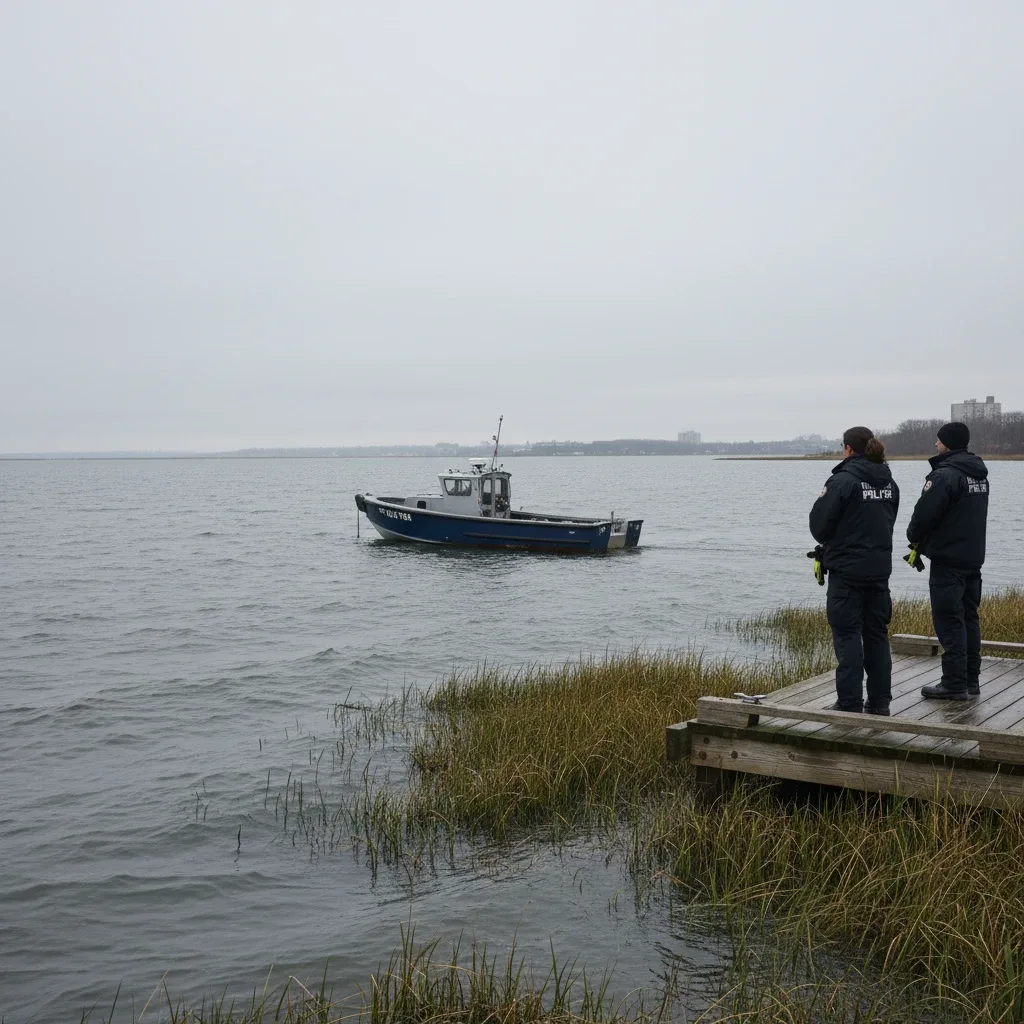
NYPD Marine Units Recover Unidentified Remains Near Shellbank Basin By Newstrix | March 13, 2026 | Environment NEW YORK — Two distinct emergency responses converged near Charles Park Thursday as police recovered remains from Jamaica Bay while tides rose rapidly, making it difficult for residents monitoring the weather near howard beach, queens, ABC7 New York reported. The dual police and environmental challenges highlight the complex logistical coordination required to manage the neighborhood's lowlying marshlands. Harbor Patrol Sweeps Shellbank Basin Waterfront Detectives from the NYPD Marine Unit deployed specialized dive vessels along the outer edge of the basin early Thursday morning. This search operation was initiated after a commercial fisherman reported an anomalous object floating near the deepwater channel. Investigators recovered the remains and transported them to the medical examiner's facility located in Manhattan for forensic analysis. Police have set up a temporary operations post near the beach parking lot as the investigation continues. Rising Tide Cycle Complicates Coastal Search Operations Coastal search efforts were significantly hampered by a hightide cycle that submerged local docks and pushed saltwater onto adjacent access roads. Public works crews monitored drainage valves along Cross Bay Boulevard to prevent localized street flooding. "The combination of strong lunar tides and sudden wind shifts created hazardous conditions for our dive teams today," NYPD Marine Sergeant Thomas Higgins told reporters at the scene. Higgins added that operations are carefully scheduled to match the daily slack water periods. Infrastructure Stress Increases During Extreme Tide Events Local property owners along the Hamilton Beach canal networks continue to experience tidal flooding that regularly overflows street curbs. The frequent inundation has accelerated the deterioration of local bulkheads and municipal drainage infrastructure. Many of these coastal infrastructure challenges are documented by civic groups tracking and regional environmental investments. Residents are advocating for modern pumping stations to help clear flooded streets during hightide cycles. Historic Marine Recoveries Along the South Queens Shoreline Jamaica Bay's expansive network of deep channels and shallow marshlands has historically been the focus of numerous marine search and recovery operations. Regional currents frequently carry debris from the wider harbor into the protected inlets of South Queens. Environmental scientists note that the local geography acts as a natural catchment basin for regional waterways. Public safety officials rely on detailed current mapping models provided by federal maritime agencies to coordinate search grids during active investigations. Medical Examiner Begins Forensic Reconstruction Protocols The Office of Chief Medical Examiner is utilizing advanced genetic profiling and dental records to establish the identity of the recovered remains. Forensic teams estimate that the identification process may take several weeks due to the condition of the maritime recovery. By early afternoon, local residents were returning to their normal schedules along the waterfront paths, though police tape remained visible near the pier. Civic leaders continue to emphasize the importance of maintaining modern surveillance and safety measures along the shoreline. Frequently Asked Questions What role does local weather play in marine search and recovery operations? High winds and heavy tidal surges can shift underwater currents, making it difficult for divers to maintain visibility and safely navigate the basin. Heavy rains can also increase runoff from local drainage systems, which temporarily reduces water clarity. Search teams must carefully coordinate their schedules with local high and low tide cycles to ensure safety. How are city agencies addressing tidal street flooding in Howard Beach? The city has allocated funding for localized bulkheading repairs and the installation of oneway backflow valves on storm drains. These valves prevent seawater from backing up into residential streets during astronomical high tides. Longterm plans include coastal wetland restoration projects designed to absorb wave energy and minimize streetlevel surges.