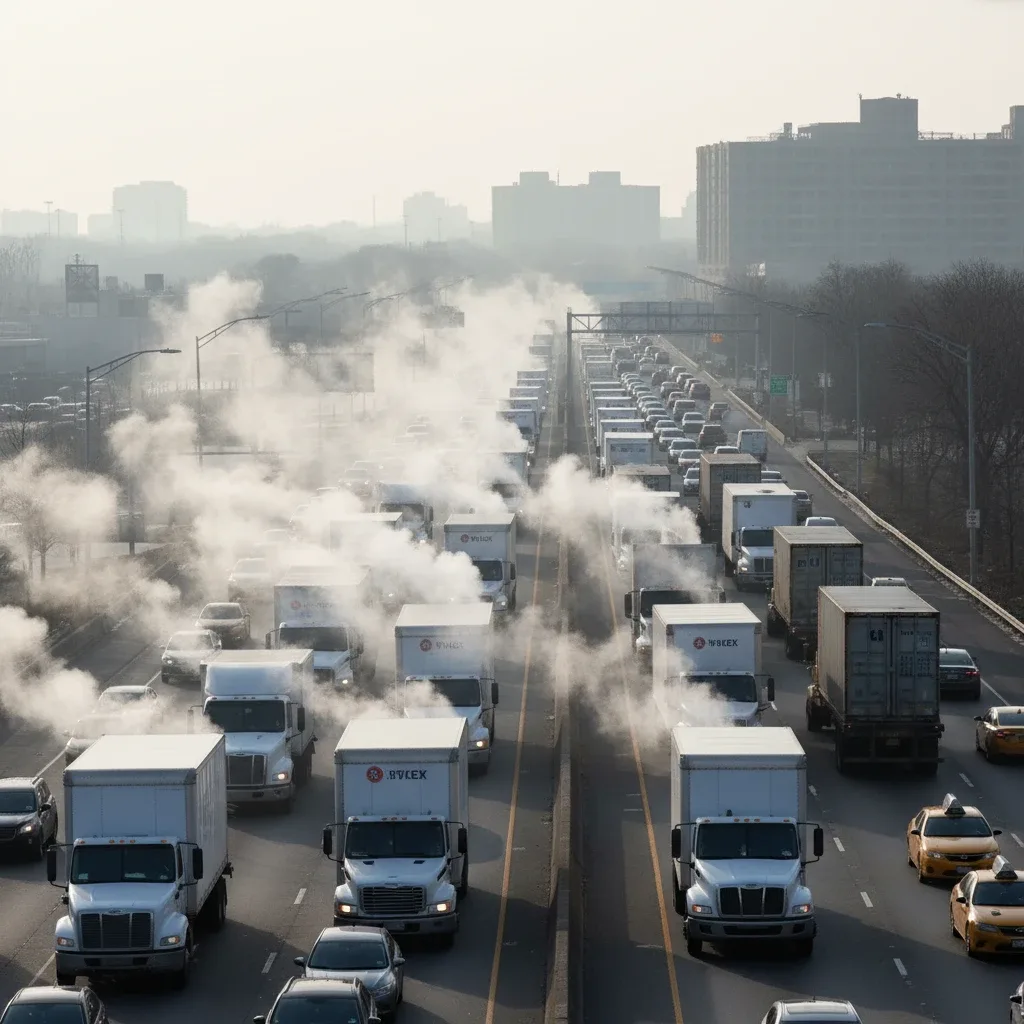
Port Authority Modifies Cargo Routes to Mitigate Highway Congestion By Newstrix | March 9, 2026 | Transportation & Traffic NEW YORK — Port Authority Cargo Operations Director Arthur Pendelton implemented new security and screening protocols at JFK Airport cargo facilities on Monday after international supply chains experienced significant delays, Global News reported. The immediate adjustment triggered severe commercial vehicle backups across major South Queens arterials. The logistical changes caused traffic congestion to extend several miles along the westbound lanes of the highway. Commuters heading toward Brooklyn experienced substantial travel delays during the morning rush hour. Port Authority Modifies JFK Cargo Inspection Protocols The new cargo screening procedures require more detailed physical inspections of international shipments arriving at the nearby airport. These safety measures are designed to comply with updated federal shipping regulations implemented in early 2026. Exhaust fumes hung thick in the cold air as a long line of yellow cabs and commercial trucks stood bumpertobumper along the highway shoulder. State troopers were positioned at exit ramps to assist with commercial vehicle management. Commuter Advocacy Spokesman Denounces Severe Highway Gridlock "The lack of coordination between federal cargo screeners and local traffic enforcement has created a daily bottleneck for Queens drivers," said Robert Chen, Spokesman for the Queens Commuter Alliance. Chen urged transportation officials to establish dedicated lanes for airportbound trucks to relieve local highways. Commuter groups are advocating for offpeak delivery schedules to distribute heavy truck traffic more evenly throughout the night. Currently, peak commercial transit coincides directly with the morning school commute. Department of Transportation Data Tracks Significant Travel Delays According to regional traffic sensor data, average transit times between JFK Airport and Brooklyn increased by 45 minutes during the first week of the new protocols. The most severe delays were recorded along the westbound highway corridors during peak transit hours. Many drivers are seeking alternative routes through local residential streets to avoid the main highway blockages. This shift has raised concerns among local residents regarding pedestrian safety along secondary roads, especially after recent caused similar gridlock patterns across South Queens. Neighborhood Groups Propose Alternative Truck Routes Civic associations in South Queens are proposing that heavy cargo trucks be rerouted through commercial industrial zones away from residential neighborhoods. They argue that local streets were not designed to handle the weight and volume of modern logistics fleets. Department of Transportation representatives agreed to conduct a comprehensive traffic flow study to evaluate the feasibility of alternative routing. The study is expected to take sixty days to complete. Next Phase of Traffic Remediation Plans Scheduled Transportation officials plan to introduce automated tolling and digital cargo preclearance systems to expedite truck movement through the airport checkpoints. This technology is scheduled for installation at twelve cargo terminals by September 2026. Until these systems are operational, drivers are advised to allow extra travel time when navigating the lanes. The Port Authority will continue to post realtime transit updates on digital highway signs. Frequently Asked Questions Why did the Port Authority implement these new cargo screening protocols? The Port Authority implemented the updated protocols to comply with new federal transportation security mandates designed to enhance cargo screening safety at major international transit hubs. These procedures require more extensive physical and electronic verification of incoming international shipments before they are cleared for land transport. The measures aim to prevent contraband and hazardous materials from entering domestic supply chains. How can commuters avoid the heavy traffic congestion near JFK Airport? Commuters are advised to utilize public transportation options, such as the Long Island Rail Road or the subway system, which bypass highway delays entirely. Drivers who must travel by car should plan their trips during offpeak hours or utilize navigation applications to find alternative regional routes. Checking realtime state highway cameras before departure can also help drivers avoid the most congested zones.