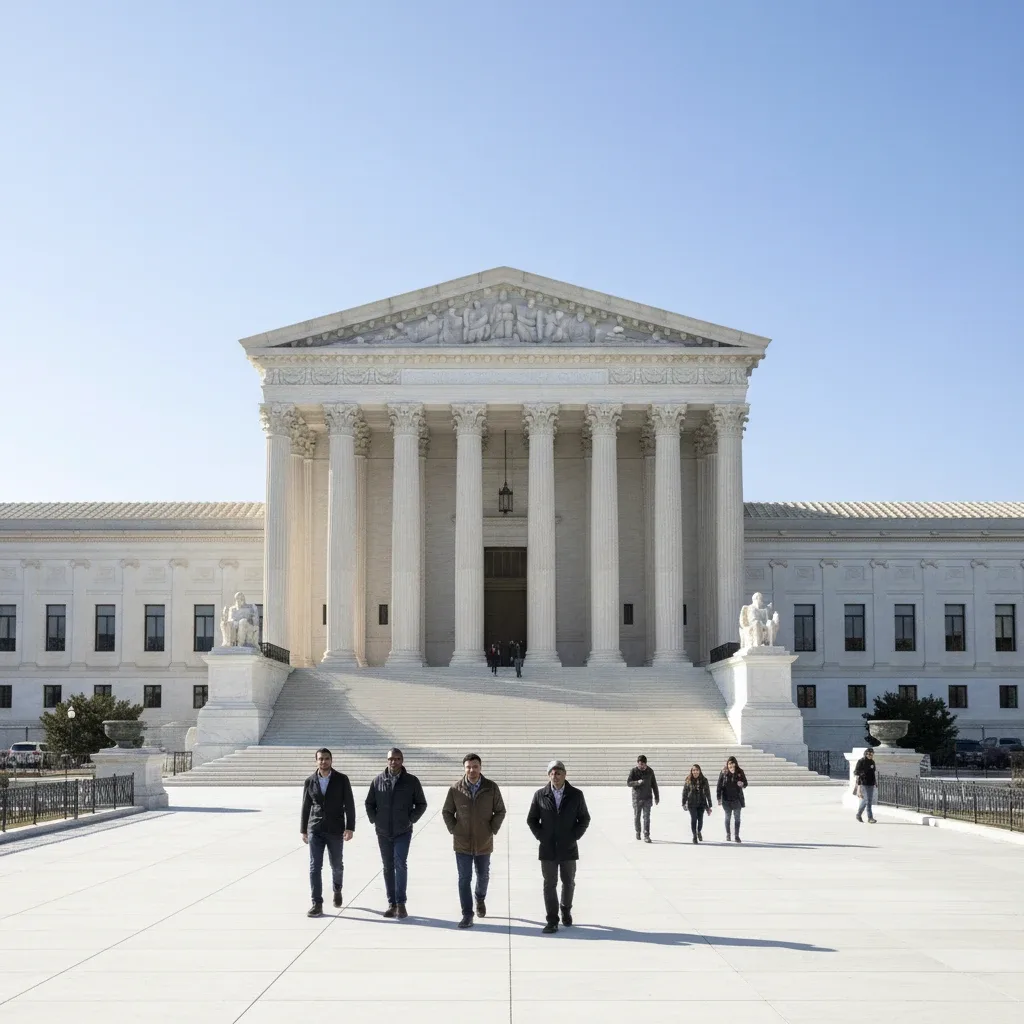
US Supreme Court Rejects Trump Bid on Federal Reserve Governor Cook 2026 By Newstrix | February 20, 2026 | Government & Politics NEW YORK — The U.S. Supreme Court on Thursday rejected former President Donald Trump's attempt to remove Federal Reserve Governor Lisa Cook, upholding the independence of the central bank in a 54 decision. The ruling, which Reuters first reported, is seen as a significant defense of institutional checks and balances against presidential power. The case has garnered considerable national attention, touching on the delicate balance between the presidency and independent government institutions, a topic of frequent debate in political circles. Court Upholds Central Bank Independence The majority opinion, delivered by Chief Justice John Roberts, affirmed that the President's power to remove officials from independent agencies is not absolute. The decision highlighted the importance of a nonpolitical Federal Reserve in maintaining economic stability and public trust. Governor Cook, appointed to a 14year term, will continue in her role, a move welcomed by financial markets seeking stability. The ruling marks a notable legal setback for the former president and his efforts to exert greater influence over federal agencies. Howard Beach Reacts to National Political Climate While direct local implications for Howard Beach residents are not immediately apparent, the Supreme Court's ruling contributes to the broader national political discourse. Conversations in local diners and community forums often touch on the perceived fairness and independence of federal institutions. "It just shows that there are still some guardrails in place," commented Maria Rodriguez, a longtime resident and retired teacher from Howard Beach, while at a local cafe. "You want to believe that some things are above politics, especially when it comes to the economy." Separating Powers and Economic Policy The Supreme Court's decision underscores the constitutional principle of separation of powers. The Federal Reserve, as an independent body, is tasked with setting monetary policy free from direct political pressure, aiming to promote maximum employment and price stability. This independence is considered crucial for longterm economic planning, shielding crucial decisions from shortterm political cycles. The court’s verdict reaffirms that these protections extend to its appointed officials. Historical Context of Fed Independence The Federal Reserve's structure was designed with independence in mind following its creation in 1913. This was largely a response to historical periods where monetary policy was seen as too vulnerable to political whims, leading to economic instability. Over the decades, various administrations have tested the boundaries of presidential authority over the Fed. This latest ruling serves as a modern reaffirmation of those established precedents, as previously seen with regarding institutional roles. Future Implications for Presidential Authority The decision sets a precedent for future presidential administrations regarding their ability to remove officials from independent regulatory bodies. It suggests a limit on the executive's power to unilaterally reshape the leadership of agencies designed to operate outside direct political control. Legal experts are analyzing the 54 split, which indicates a deeply divided court on issues concerning presidential authority and agency independence. This ruling is expected to influence future legal challenges concerning the executive branch's oversight of federal institutions and is discussed further in Supreme Court rulings impacting Queens. Frequently Asked Questions What does the Supreme Court's ruling mean for the Federal Reserve and its policies? The Supreme Court's ruling reinforces the Federal Reserve's independence from presidential interference, particularly concerning the removal of its governors. This ensures that monetary policy decisions, such as interest rate adjustments, are made based on economic data and not political pressures, aiming for greater stability for the national economy and, by extension, for areas like Howard Beach. How might this decision affect the perception of trust in government institutions among Howard Beach residents? The decision could potentially bolster public trust in the judiciary and other independent institutions, signaling that there are checks on executive power. For many Howard Beach residents who follow national politics, such rulings are seen as crucial in maintaining the integrity and impartiality of vital government functions, reassuring them about the stability of the governmental framework. Are there any direct economic impacts of this ruling on local businesses in Howard Beach? While the ruling doesn't have an immediate, direct economic impact on Howard Beach businesses, the Federal Reserve's continued independence is vital for stable economic conditions. A stable Fed can better manage inflation an