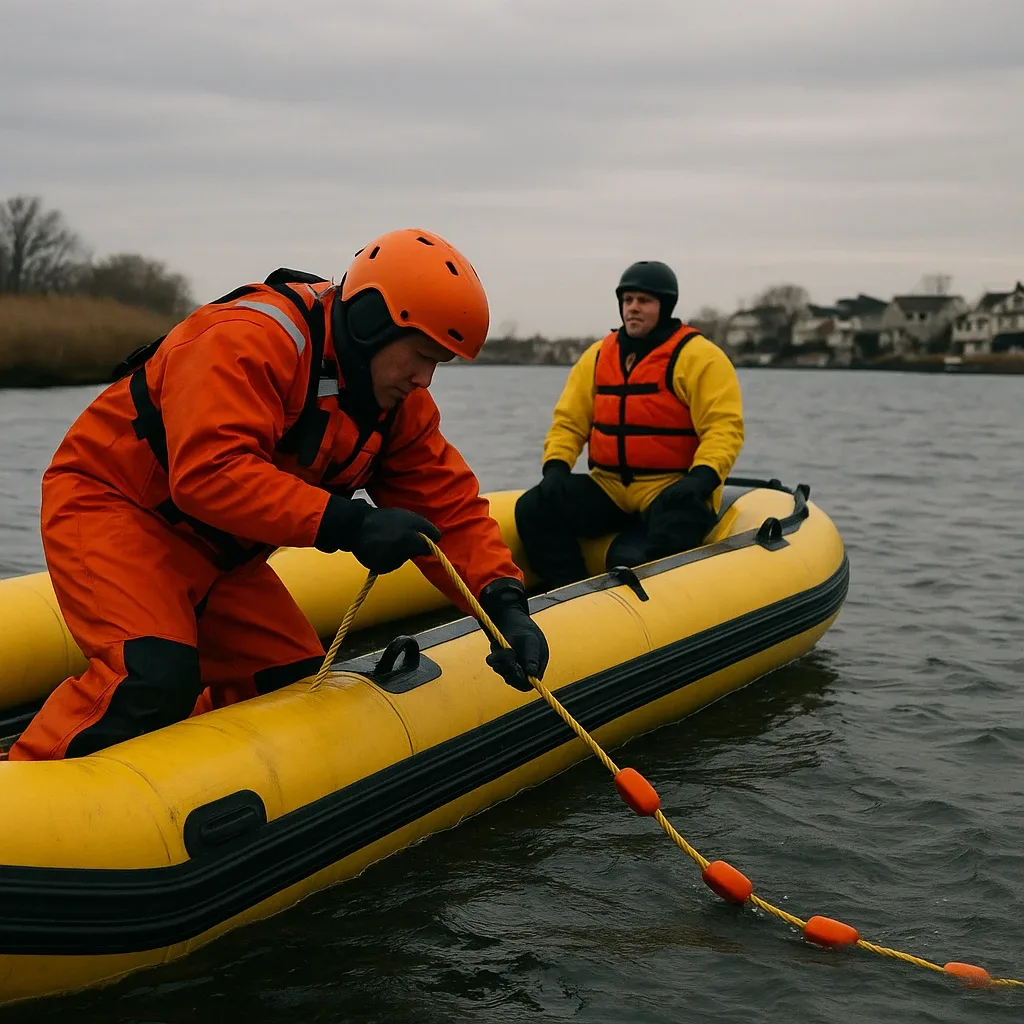
Water Safety Training Completed in Weather Near Howard Beach, Queens By Newstrix | February 20, 2026 | Environment NEW YORK — Sixtyfive marine rescue personnel from the NYPD and FDNY completed a specialized swiftwater emergency training exercise Thursday, municipal agency logs showed. The intensive drills focused on lowlying tidal corridors along the south Queens waterfront. According to FDNY officials, the exercise was timed to coincide with highvelocity winter tides to simulate realworld rescue conditions. The training aims to improve interagency coordination during severe flooding events and coastal storms. Marine Rescue Personnel Gather at Shellbank Basin for Exercises First responders established a command post near the 165th Avenue waterfront path early Thursday morning, deploying rescue watercraft and specialized flotation gear. The teams simulated multiple emergency scenarios, including retrieving stranded boaters and securing loose docks. While the conditions present ongoing drainage challenges for coastal residents, public safety agencies are continuously training to address immediate physical hazards. Emergency crews noted that understanding the unique hydrology of Jamaica Bay is critical for successful maritime operations. Commissioner Kavanaugh Details SwiftWater Emergency Response Systems "Coordinated swiftwater drills are essential for maintaining our rescue preparedness along these highly vulnerable coastal boundaries," FDNY Commissioner Robert J. Kavanaugh said following the conclusion of the exercises on Thursday. Kavanaugh added that the department plans to station additional specialized rescue gear in south Queens ahead of the spring storm season. The training program emphasized the use of specialized motorized hulls designed to navigate shallow marshlands without damaging local ecosystems. Personnel also practiced deploying temporary barriers to divert rising waters from sensitive utility structures. Hydrological Data Indicates Increased LowLying Tidal Vulnerabilities Recent oceanic surveys conducted by the Department of Environmental Protection show a seven percent increase in tidal highwater marks over the past three decades. This data highlights the growing necessity for highly trained swiftwater rescue units in local neighborhoods. As reported by , seasonal high tides combined with heavy rainfall continue to challenge municipal drainage systems along the south Queens waterfront. Coastal engineers are utilizing these safety exercises to gather realtime data on water velocity and debris accumulation. Local Coastal Protection Efforts Adapt to Rising Basin Waters Civic associations in old Howard Beach have been active in advocating for infrastructure upgrades, including the installation of highcapacity tidal gates and reinforced bulkheads. Residents have expressed support for the increased presence of emergency personnel during hightide cycles. These safety initiatives represent a collaborative effort between municipal planners and local neighborhood coalitions. By integrating realtime meteorological monitoring with rapidresponse deployments, the city aims to reduce the economic impact of chronic street flooding. Water Safety Infrastructure Upgrades Targeted for Late Spring Completion Department of Design and Construction officials confirmed that several localized bulkhead repair projects are scheduled for completion by May. These physical improvements are designed to complement the active emergency response strategies practiced during Thursday's drills. Emergency management personnel will continue to monitor regional weather stations to coordinate preventive deployments. The ongoing training exercises ensure that first responders are fully prepared for any severe weather events that may affect the south Queens area. Frequently Asked Questions What should residents do during severe tidal surge warnings in Queens? Residents living in lowlying coastal areas should monitor local meteorological reports and ensure that sumps pumps are fully operational. It is highly recommended to move vehicles to higher ground, such as the elevated parking areas near Lindenwood, and avoid driving through flooded intersections where water depths can be deceptive. How does the city monitor realtime water levels in Jamaica Bay? The city utilizes a network of automated tidal gauges managed by the United States Geological Survey and the NYC Department of Environmental Protection. These sensors transmit realtime water elevation and wind velocity data to emergency management centers, allowing coordinators to issue localized flood alerts to residents.